Product Description
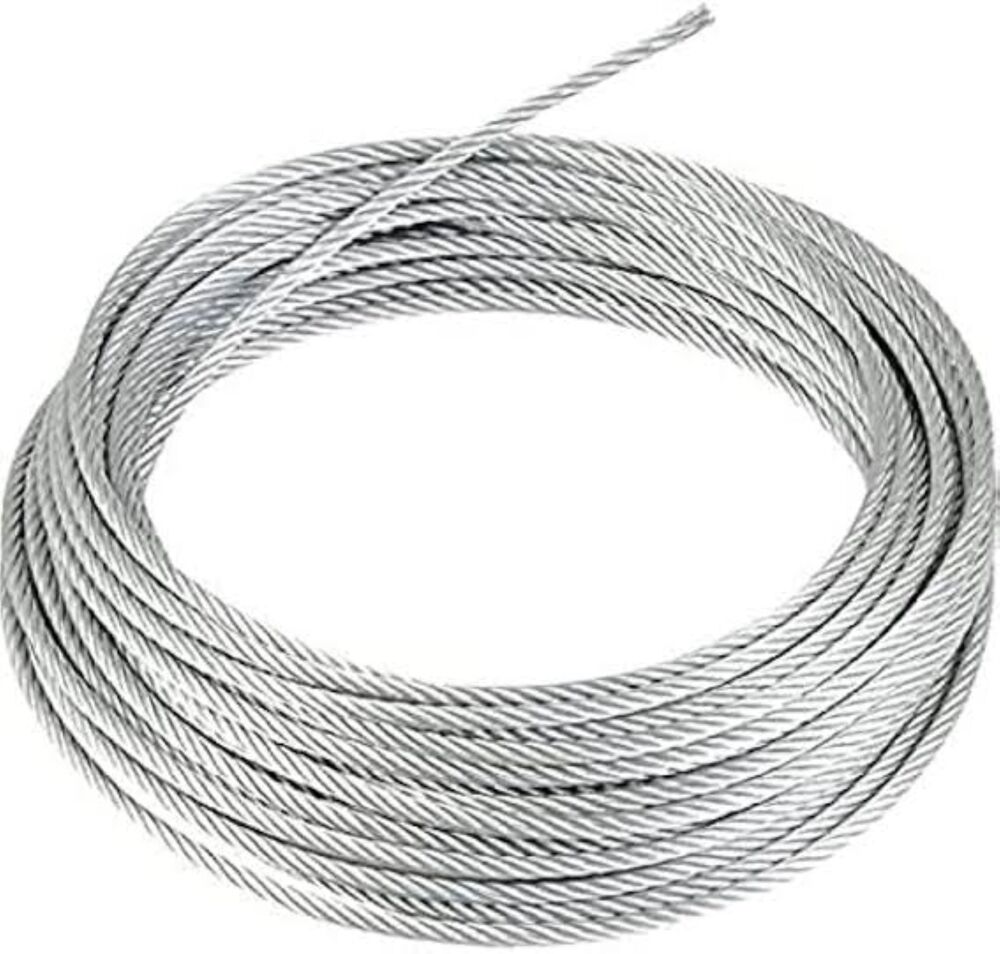
Galvanized wire ropes are steel wire ropes coated with a layer of zinc to enhance their resistance to corrosion and rust. The galvanization process makes them ideal for applications in harsh environments where exposure to moisture, chemicals, or weathering can cause uncoated steel to deteriorate.
Key Features:
- Corrosion Resistance: The zinc coating acts as a protective barrier against rust and oxidation.
- Durability: With enhanced resistance to environmental factors, these ropes have a longer lifespan compared to ungalvanized counterparts.
- Strength: Maintains high tensile strength while providing added protection.
- Versatility: Suitable for a variety of uses in construction, marine applications, agriculture, and industrial settings.
Common Applications:
- Marine and Offshore: Used in ship rigging, fishing nets, and mooring lines due to their ability to withstand saltwater exposure.
- Construction: Ideal for scaffolding, hoisting, and load-bearing purposes.
- Agriculture: Used for fencing and vine training.
- General Industrial Use: For machinery, lifting, and pulling.
Frequently Asked Questions (FAQs)
1. What are the types of galvanized wire ropes?
There are two main types:
- Hot-Dip Galvanized: Provides a thicker zinc coating, offering greater protection against corrosion.
- Electro-Galvanized: Has a thinner, smoother zinc coating but less corrosion resistance compared to hot-dip.
2. How do I choose the right galvanized wire rope for my needs?
Consider the following factors:
- Environment: For wet or corrosive environments, opt for hot-dip galvanized ropes.
- Load Requirements: Ensure the rope's tensile strength matches your application.
- Flexibility vs. Strength: More wires in a strand increase flexibility; fewer wires offer greater abrasion resistance.
3. How long does the zinc coating last?
The lifespan of the zinc coating depends on the environmental conditions and the thickness of the coating. In moderate environments, it can last several years, but in highly corrosive conditions, it may degrade faster.
4. Can galvanized wire ropes be used for lifting?
Yes, but always ensure the rope is rated for the specific load you intend to lift. Check its working load limit (WLL) and breaking strength.
5. What maintenance is required for galvanized wire ropes?
- Regularly inspect for wear, broken strands, or corrosion.
- Clean off dirt and debris.
- Apply a light lubricant to reduce wear and maintain flexibility.
6. Are galvanized wire ropes suitable for high-temperature applications?
Zinc coating can degrade at temperatures above 200C (392F). For high-temperature applications, consider ungalvanized ropes or those coated with heat-resistant materials.
7. How does galvanized wire rope differ from stainless steel wire rope?
- Galvanized Rope: Coated steel that is less expensive but less resistant to extreme corrosion compared to stainless steel.
- Stainless Steel Rope: Made of corrosion-resistant alloys, making it ideal for highly corrosive or wet environments, but it is generally more costly.
High Corrosion ResistanceEach wire rope undergoes advanced hot dip or electro galvanization treatments, ensuring excellent protection against rust and harsh environmental conditions. This makes them ideal for use in marine, mining, and outdoor construction applications where durability and safety are paramount.
Versatile Construction OptionsOffered in multiple constructions-6x19, 6x37, 7x19, 7x7, or custom designs-with core options of fiber or steel, these ropes can be tailored to meet the exact strength, flexibility, and operational needs of various industries. This flexibility allows customers to select the optimal configuration for lifting, crane, fencing, or general use.
Compliance & CustomizationWire ropes are manufactured to meet IS, BS, and DIN standards, ensuring that every product delivers consistent quality and performance. Customers can specify length, diameter (2 mm to 32 mm), core type, finish, and packaging to suit project requirements, ensuring complete satisfaction and reliability.
FAQ's of Galvanized Steel Wire Ropes:
Q: How are galvanized steel wire ropes treated for corrosion resistance?
A: These wire ropes are treated with either hot dip or electro galvanization, forming a protective zinc coating that shields the steel from moisture and harsh environments, delivering excellent corrosion resistance for a wide range of industrial applications.
Q: What construction types and core options are available for these wire ropes?
A: The ropes are available in standard constructions such as 6x19, 6x37, 7x19, 7x7, and can be customized as per requirement. Buyers can choose between fiber core (FC) for enhanced flexibility and steel core (IWRC) for higher strength, depending on the intended use.
Q: When should I choose a wire rope with a steel core over a fiber core?
A: Steel core (IWRC) ropes are advisable when higher strength, crush resistance, and long-term durability are needed, such as in heavy lifting or crane operations. Fiber core (FC) ropes provide superior flexibility and are suitable for general or lighter uses.
Q: Where are galvanized steel wire ropes commonly used?
A: These ropes are widely used in industries such as construction, lifting, crane operations, mining, marine applications, fencing, and other general-purpose environments that require robust and corrosion-resistant cables.
Q: What is the manufacturing process for ensuring strength and quality in these ropes?
A: The ropes are manufactured with high-grade galvanized steel, using precision engineering to meet IS, BS, or DIN standards. The galvanization process ensures rust resistance, while rigorous quality checks maintain high tensile strength and compliance with global benchmarks.
Q: How can customers specify their order for customized wire ropes?
A: Customers can define their requirements for wire diameter (2 mm - 32 mm), length, construction type, core material, finish, and packaging. The manufacturer will tailor the product to the order specification, ensuring it meets exact operational needs.
Q: What are the primary benefits of using galvanized steel wire ropes?
A: Key advantages include outstanding corrosion resistance, high tensile strength, durability, versatile application, and customizable options. These attributes ensure reliable performance and longevity even in challenging environmental and industrial conditions.








 svwr@rediffmail.com



 Send Inquiry